Artwork 1 of 2.
Press Enter to view in lightbox, Tab to access share options.
Alter modernism - where technology meets nature
Domi Horti Durabile - Autonomous ecosystems by artist M.V. Baks, where nature and technology form self-sustaining living sculptures. A series of installations exploring ecological autonomy, symbiosis, and the fragile balance between growth and collapse.
Domi Horti Durabile — The Gardens of the Self-Sustaining Home — is my ongoing research into autonomous ecosystems: living sculptures in which nature and technology do not compete, but form a self-regulating reality together. This project grows from a single question that has carried my work for years:
What happens when we stop using technology to control nature, and instead use it to set her free?
In my installations, I create environments where plants, water, microorganisms, and technological structures respond to one another as a single organism. These ecosystems develop without human intervention: they breathe, condense, grow, fail, recover, and transform — just as we do.
Sometimes the form takes on that of a sculptural vessel, in which a plant lives within a subtly guided microclimate. Other works function as closed biotopes: terrariums where moisture circulates through condensation, fungi redistribute nutrients, and temperature differences determine the rhythm of growth and stillness.
My most complex systems combine multiple layers: fish, plants, bacterial filtration, worm composting, and sensor-controlled light cycles. Although I design the initial conditions, each work subsequently evolves according to its own internal logic — an autonomous choreography in which technology remains invisibly present, a quiet guardian of life.
This project is not merely technological art; it is a reflection on our time.
We live in a world where ecological limits are increasingly tangible, yet we still believe in control. Domi Horti Durabile proposes an alternative perspective: what if we are merely hosts within a larger system, and technology can function not above nature, but beneath it?
A home garden, an experiment, a warning.
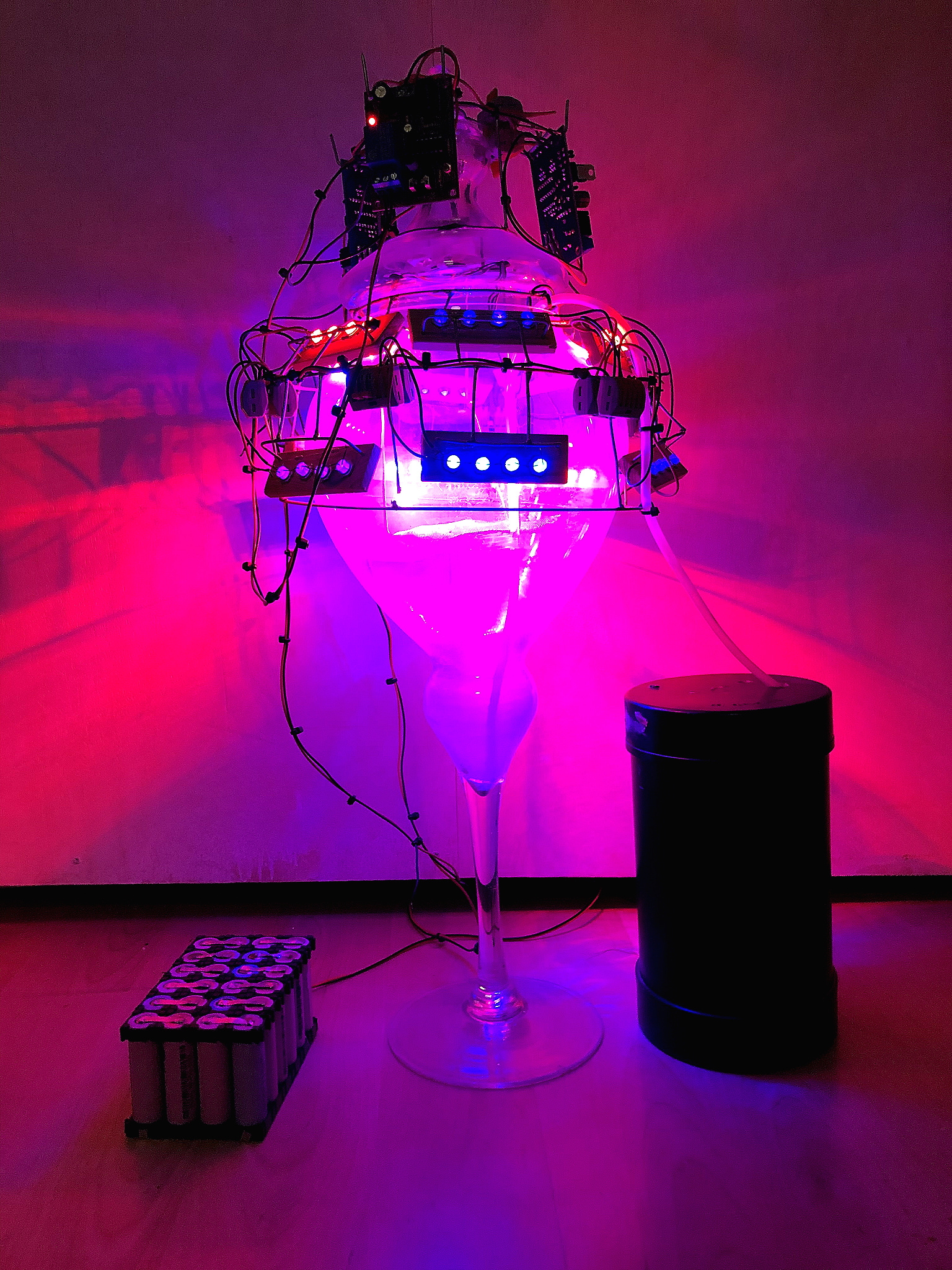
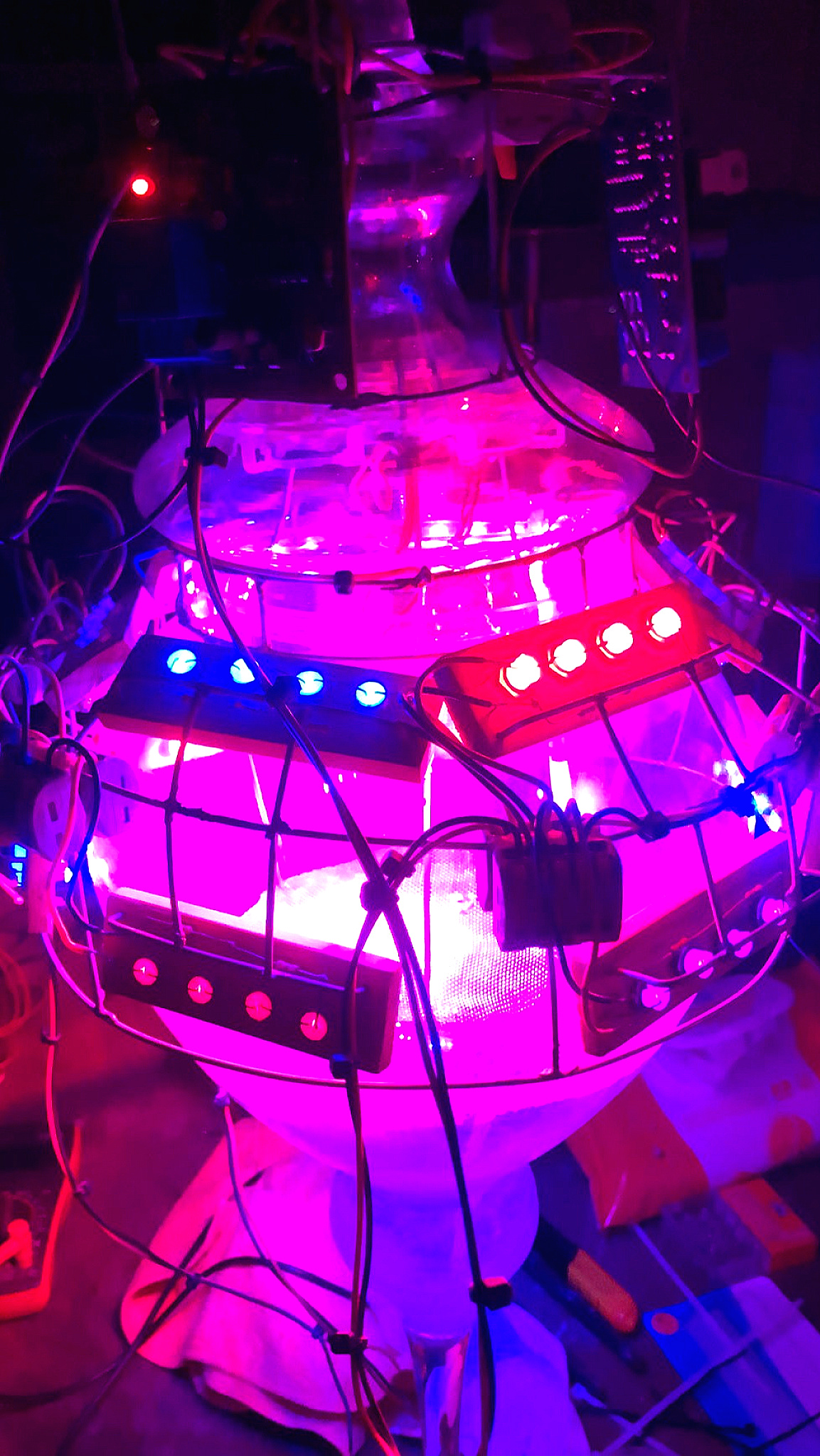
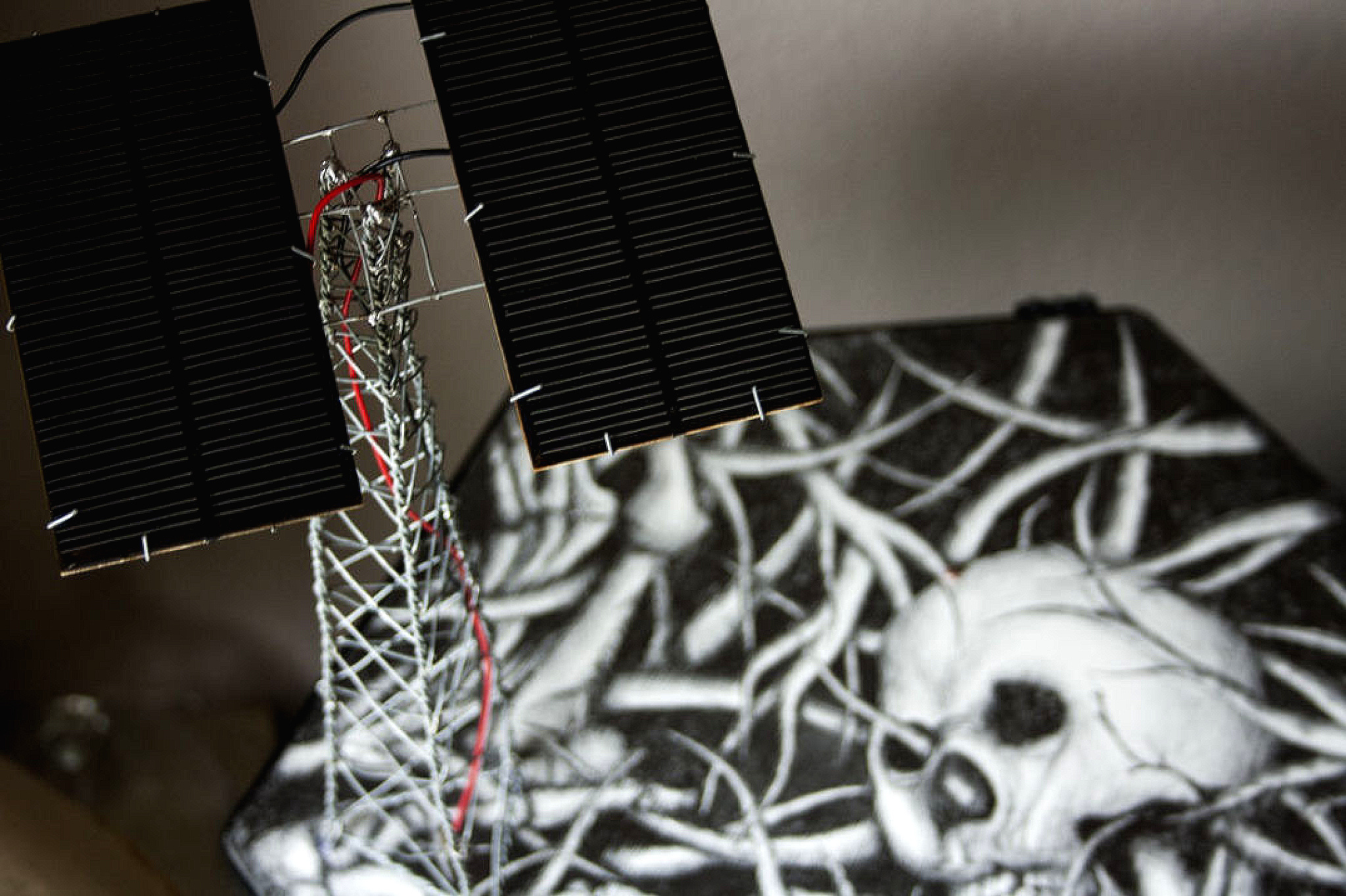
The first generation began as a semi-enclosed greenhouse in which water returned to the soil through natural condensation — a simple, elegant cycle. At the center stood an ivy plant, supported by fifteen hours of artificial daylight and a microclimate regulated by electronics hidden beneath the lid.
At first the plant flourished. It reached for the wires, wrapping itself around the very technology that sustained it. But after more than eighteen months, the balance shifted: the stems grew heavy, the wiring loosened, ventilation failed, and light became scarce.
The ecosystem declined not through sudden collapse, but through a slow, silent drift —
like a frog in gradually heated water, unable to sense the danger.
This work became a mirror:
a metaphor for how we treat our own environment, the systems we rely on,
and the fragile equilibrium between growth and breakdown.
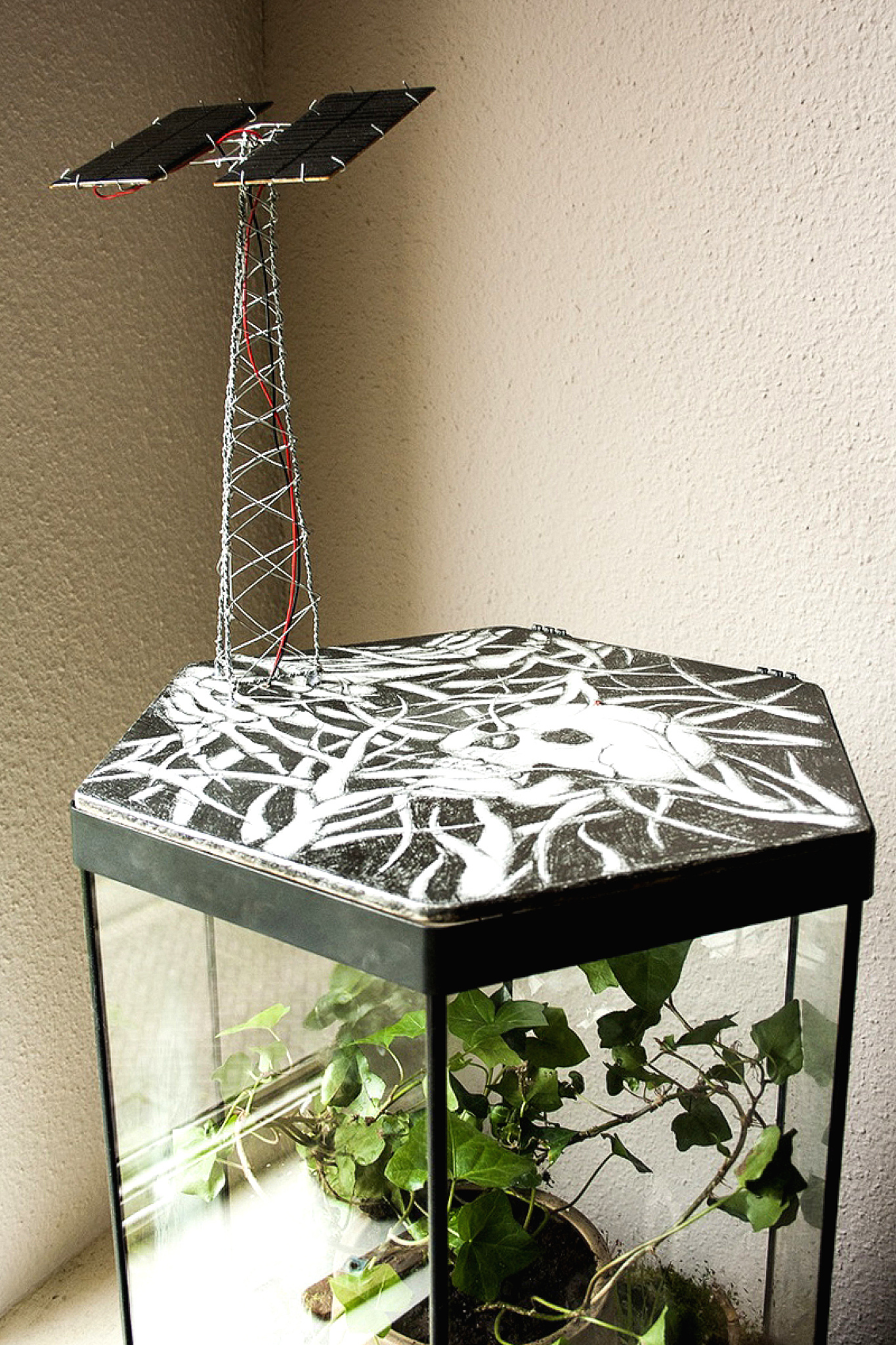
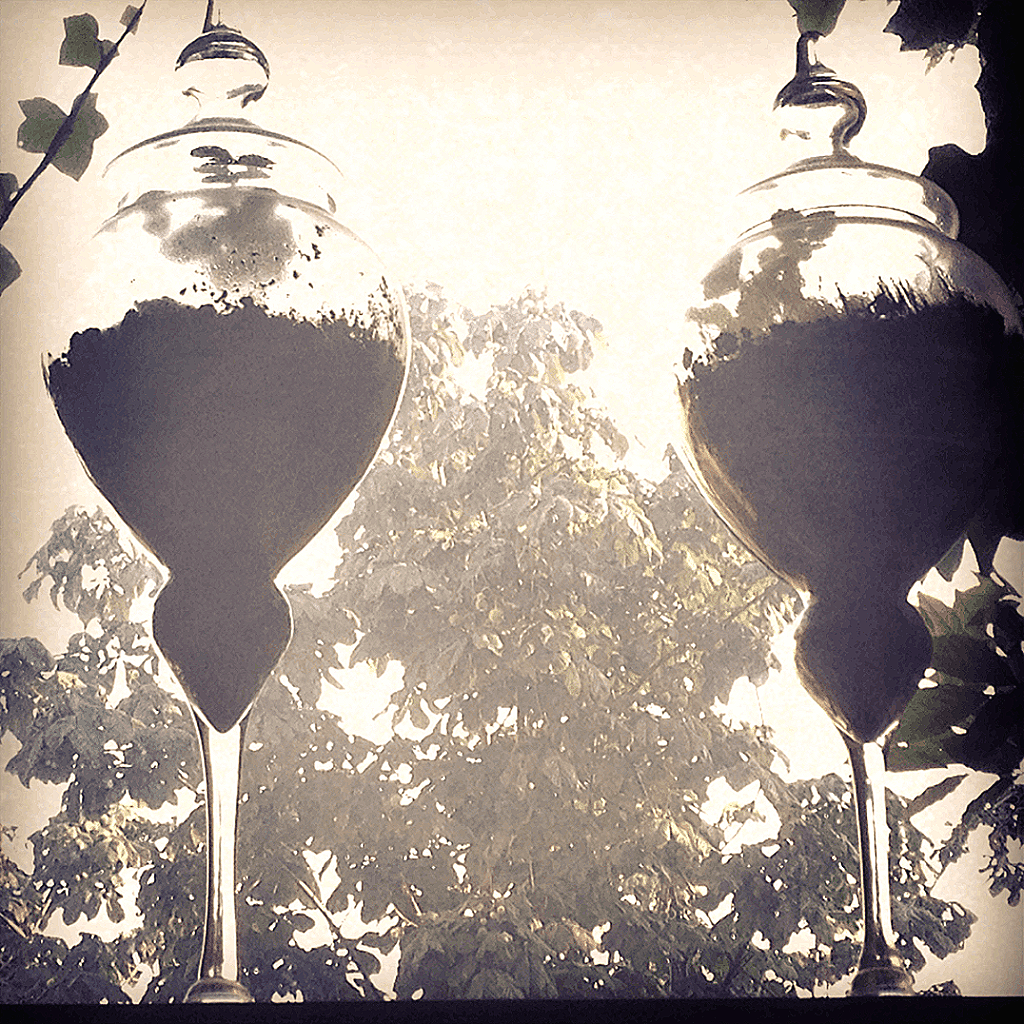
Two mirrored structures stand side by side — not identical, yet unmistakably related.
The Twins explore duality and divergence: how two ecosystems born from the same design can unfold in different directions while remaining bound by shared origin.
Where the first generation revealed the tension between growth and collapse, this version examines variation, resonance, and the subtle shifts that define living systems. Each structure develops its own rhythm, microclimate, and light response — a quiet dialogue between permanence and change.
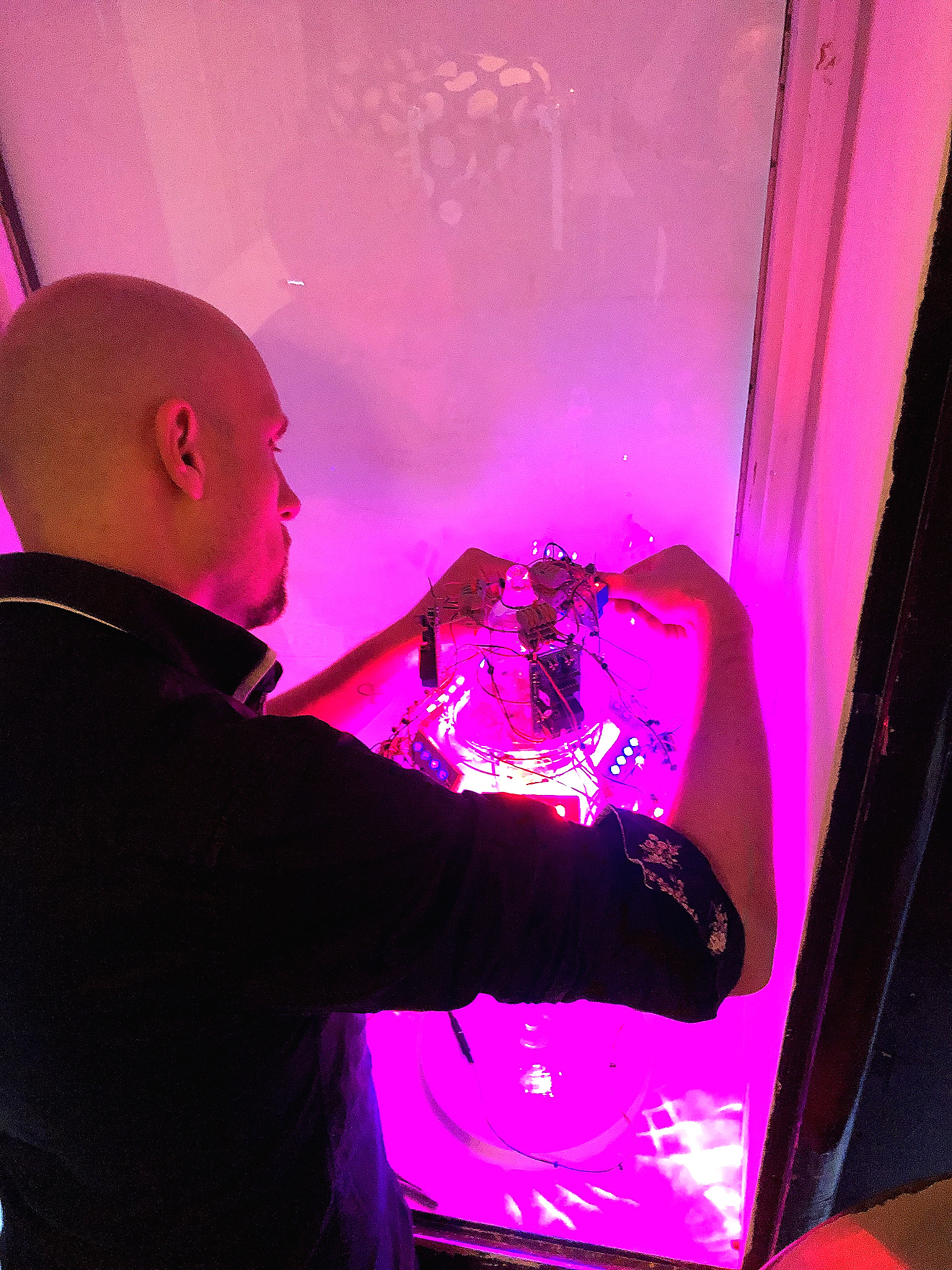
Exhibited at De Aanschouw, Rotterdam’s smallest and longest-running exhibition window, these biotopes functioned as living tableaux: visible yet untouchable, evolving behind glass while confronting passersby with the intimate mechanics of life.