Artwork 1 of 4.
Press Enter to view in lightbox, Tab to access share options.
Alter modernism - where technology meets nature
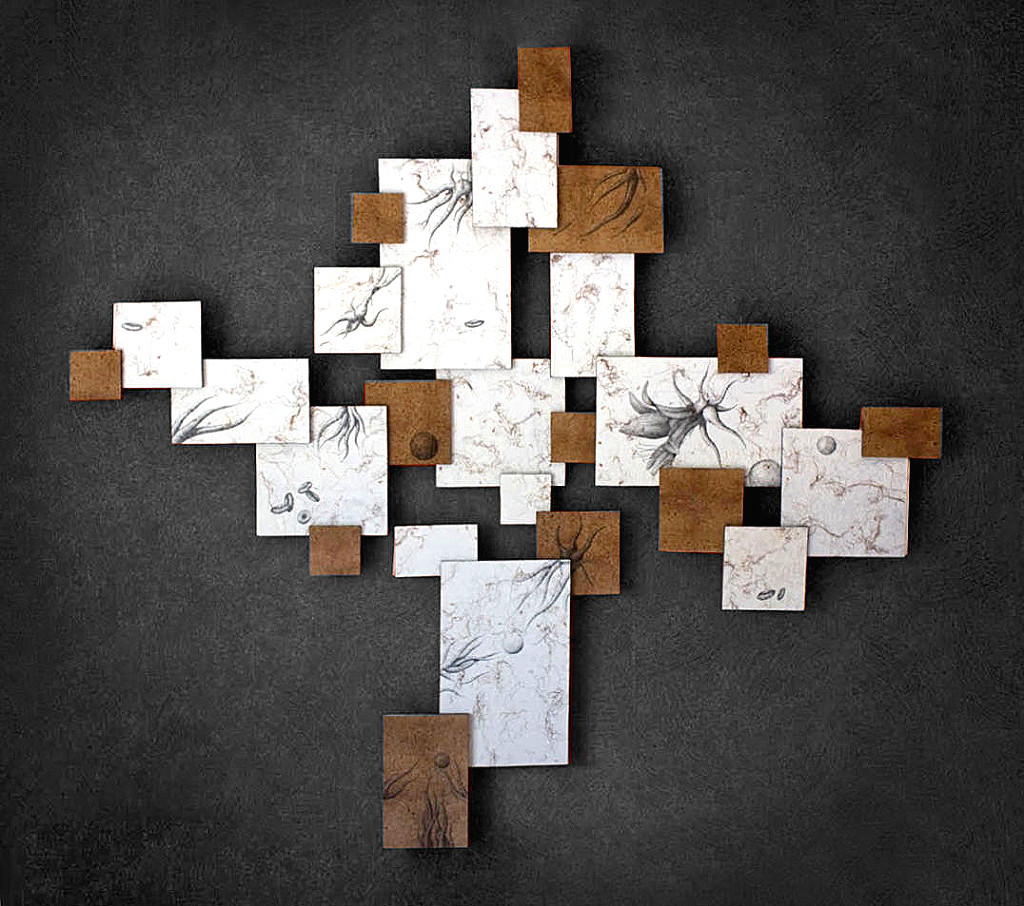
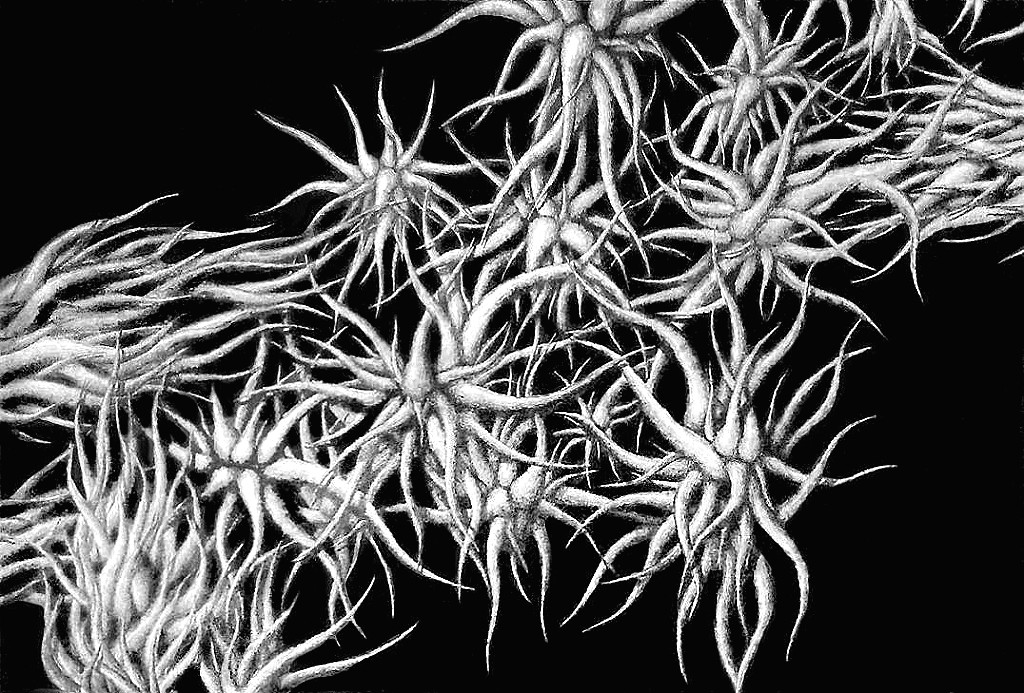
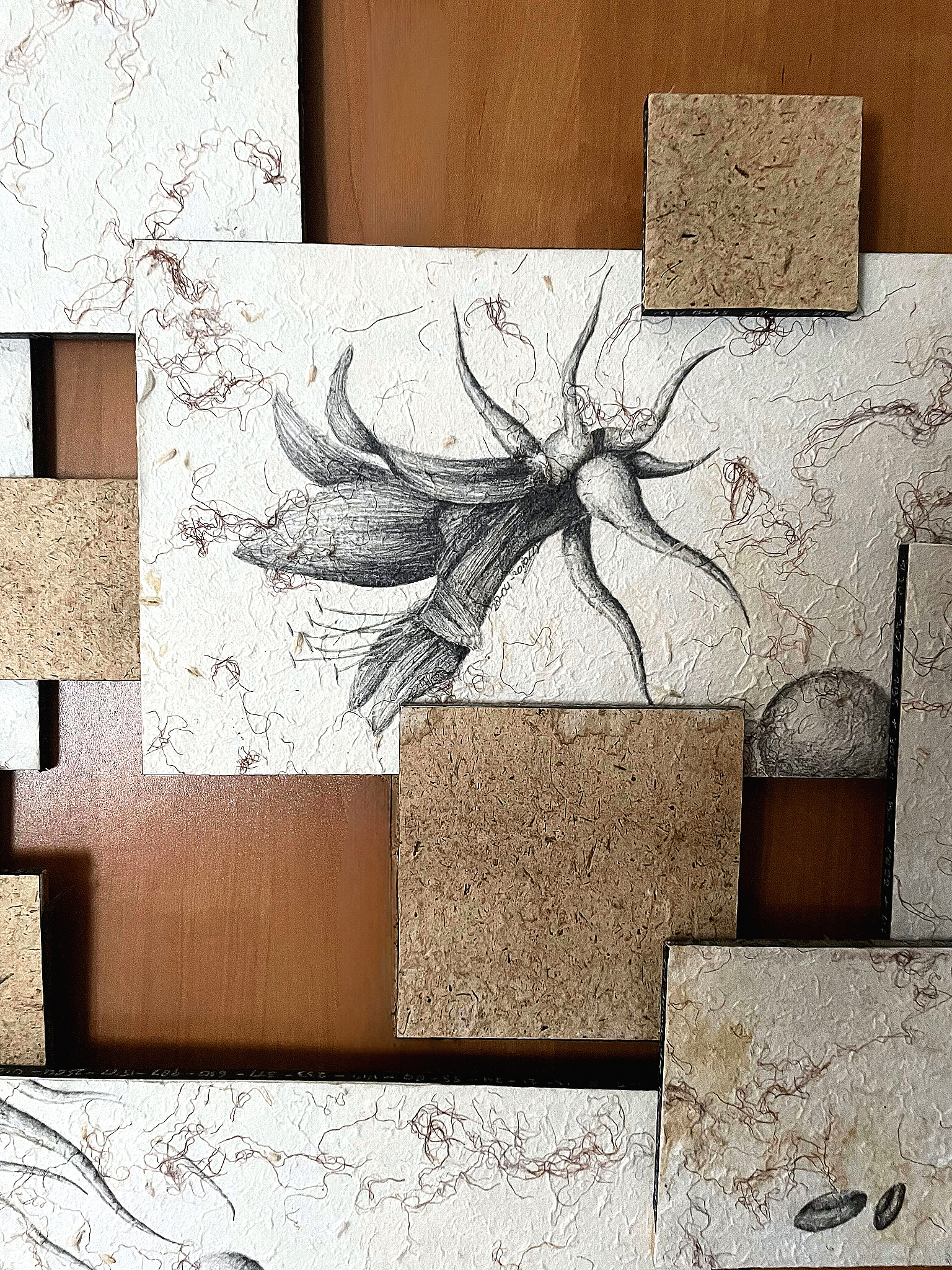
The work unfolds across multiple panels, where drawings of wild-growing roots and tendrils spread without restraint. Nature is not depicted as harmonious or decorative, but as an unstoppable force — reclaiming, infiltrating, and overtaking what once belonged to humanity.
Genesis is the origin story of Metamelei.
The work unfolds across multiple panels, where drawings of wild-growing roots and tendrils spread without restraint. Nature is not depicted as harmonious or decorative, but as an unstoppable force — reclaiming, infiltrating, and overtaking what once belonged to humanity.
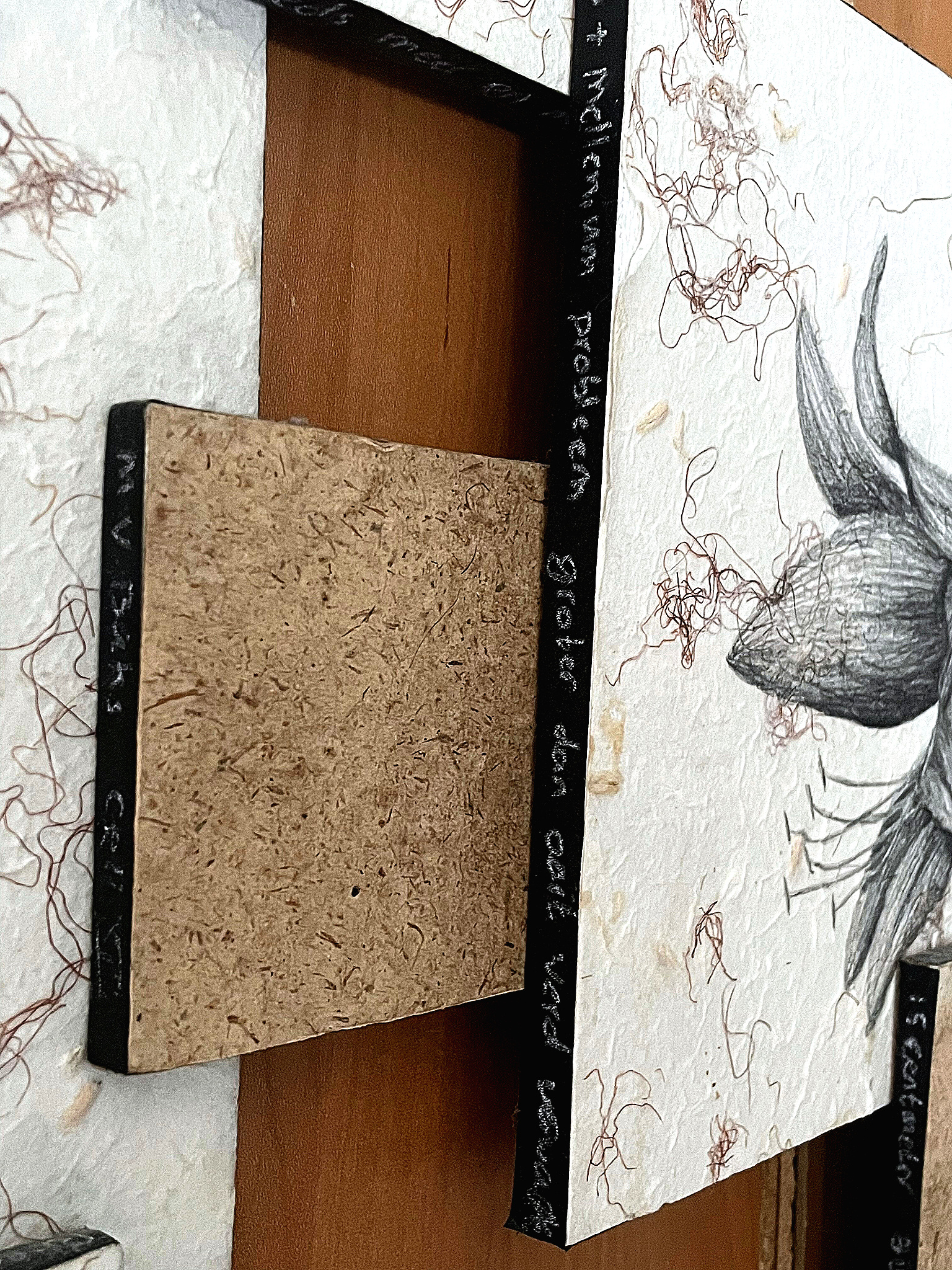
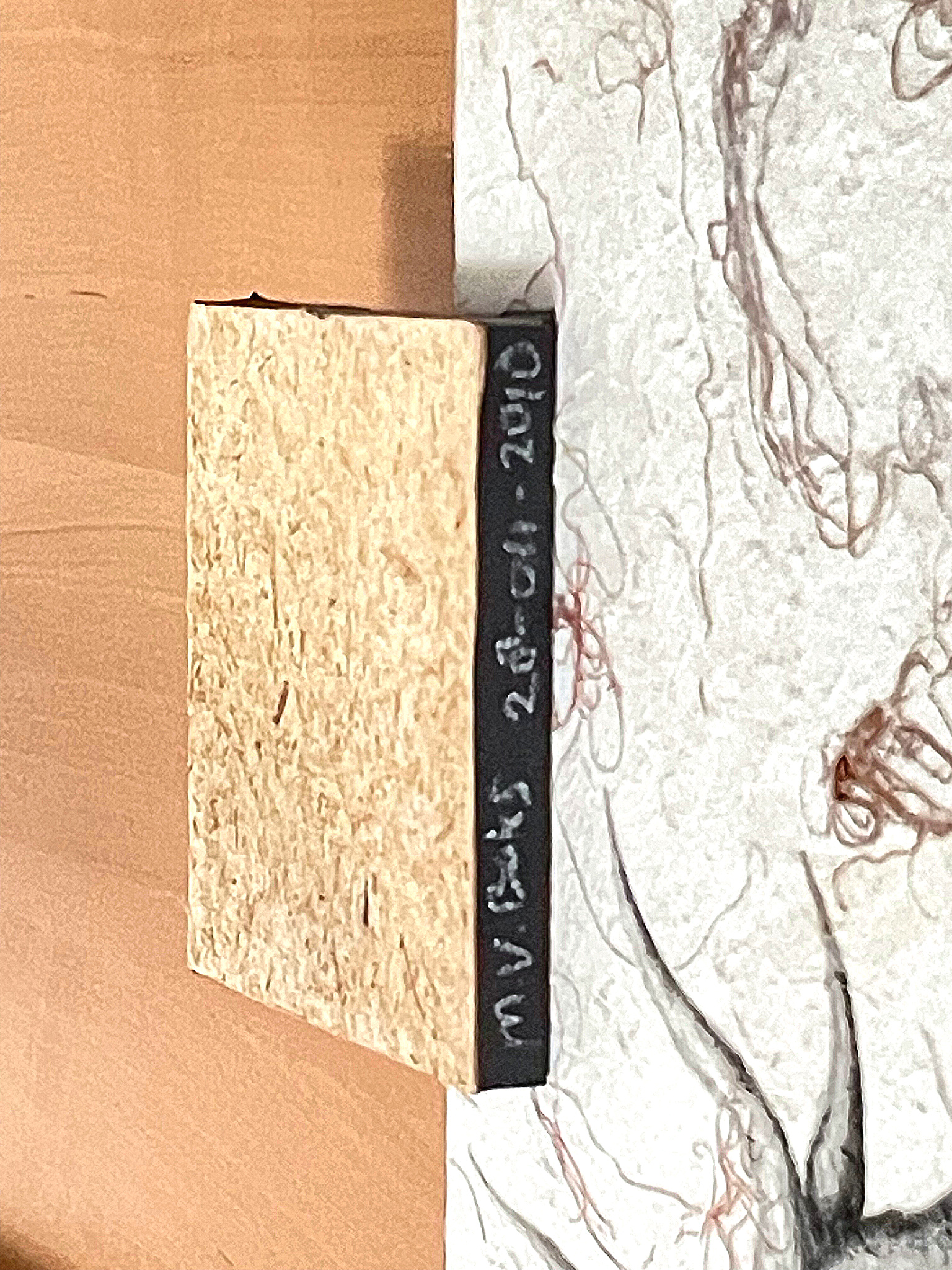
Along the edges of the panels, a story is written in chalk on blackboard surfaces. These texts describe the early moments of Metamelei’s emergence: the infection of blood cells, the slow collapse of biological balance, and the events that ultimately led to the death of nearly ninety percent of the world’s population. The chalk is deliberately unfixed. Over time, the words fade, echoing how ancient knowledge, oral histories, and early scriptures gradually disappear.
What remains is not certainty, but residue.
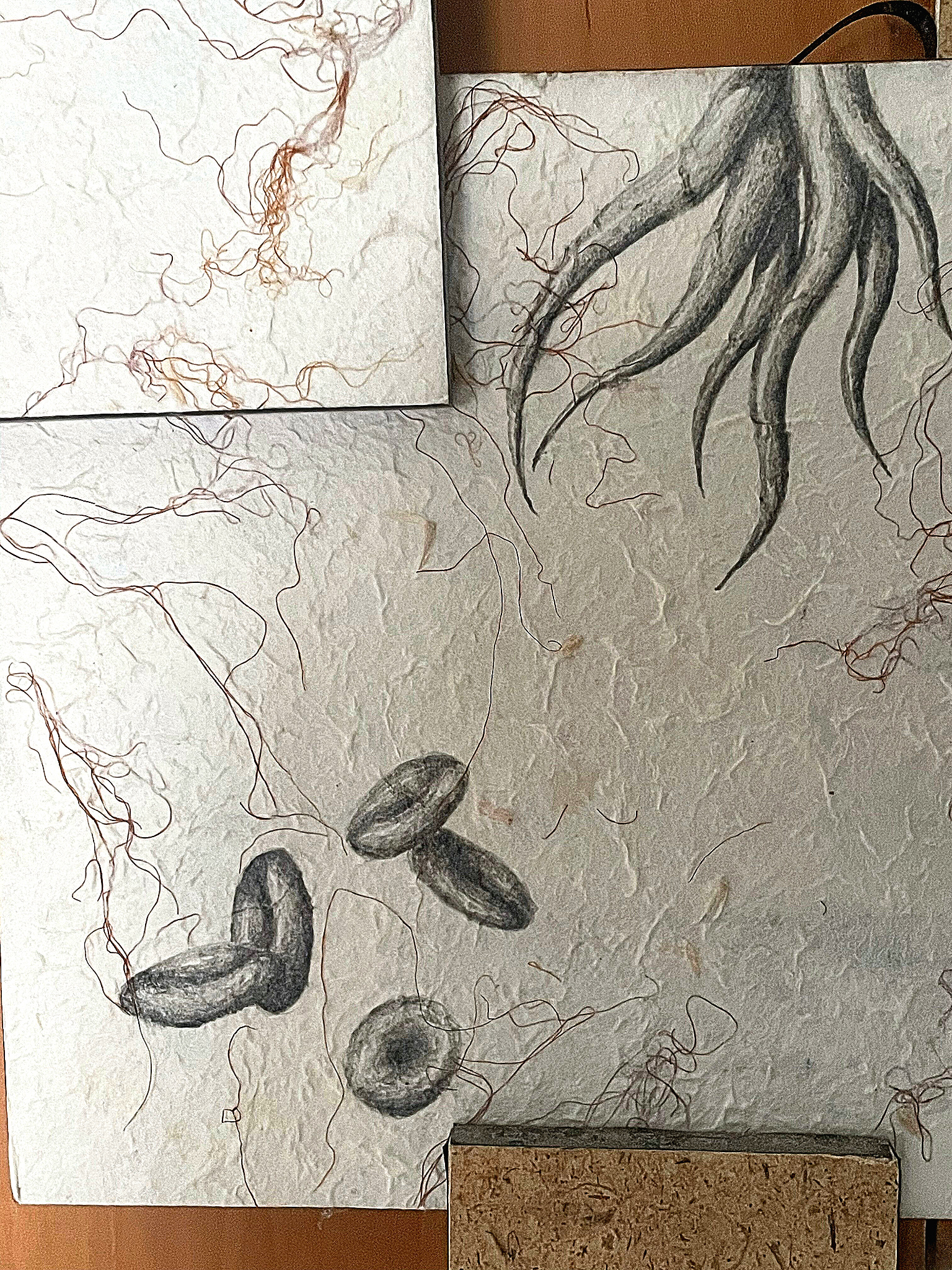
The visual language of Genesis reflects uncontrolled growth. Roots and strands spread organically, crossing boundaries between panels, mirroring the way nature ignores human-made divisions. The infected blood cells are both microscopic and monumental — symbols of fragility, inevitability, and transformation.
This work is not a warning, nor a prophecy. It's a record of transition.
Genesis marks the moment where Metamelei begins: not as a constructed world, but as something that grows out of collapse, memory loss, and the quiet persistence of life itself.
The work is held in private collection.