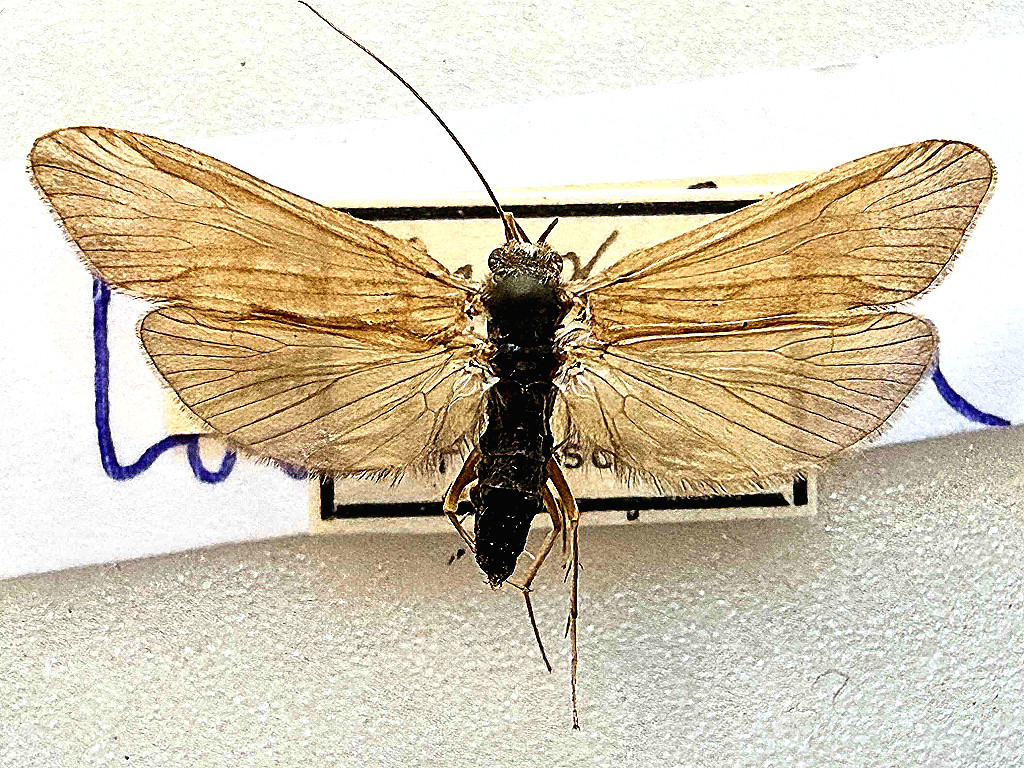
This summer, I began work on Requiem, a temporary mural in the courtyard of my apartment complex. In consultation with my downstairs neighbour, who rents the space behind the wall, I was given the opportunity to use a dark green wall as the surface for the artwork. Ironically, both the drawing and the building itself will eventually disappear to make way for new construction.
On my balcony, I maintain a small vegetable garden. Over the past few years, I have witnessed a significant decline in the number of insects visiting it. This became the starting point for Requiem: a final tribute to the insects that have sustained our ecosystems for centuries.
My knowledge of insects is limited, and for this project I needed reliable reference material. Although a vast amount of reference material is available online, it is often difficult to verify whether images are anatomically accurate. In addition, photography frequently fails to capture important details, such as the structure of scales, hairs, and the three-dimensional form of an insect. For these reasons, I decided to study the collection of the Natural History Museum Rotterdam.
Through this process, I got in touch with Marijn, one of the museum’s curators. Based on the list I had compiled during my preliminary research, he selected ten species from the museum’s collection for me to study. With a magnifying glass and a microscope at my disposal, I was able to begin my research.
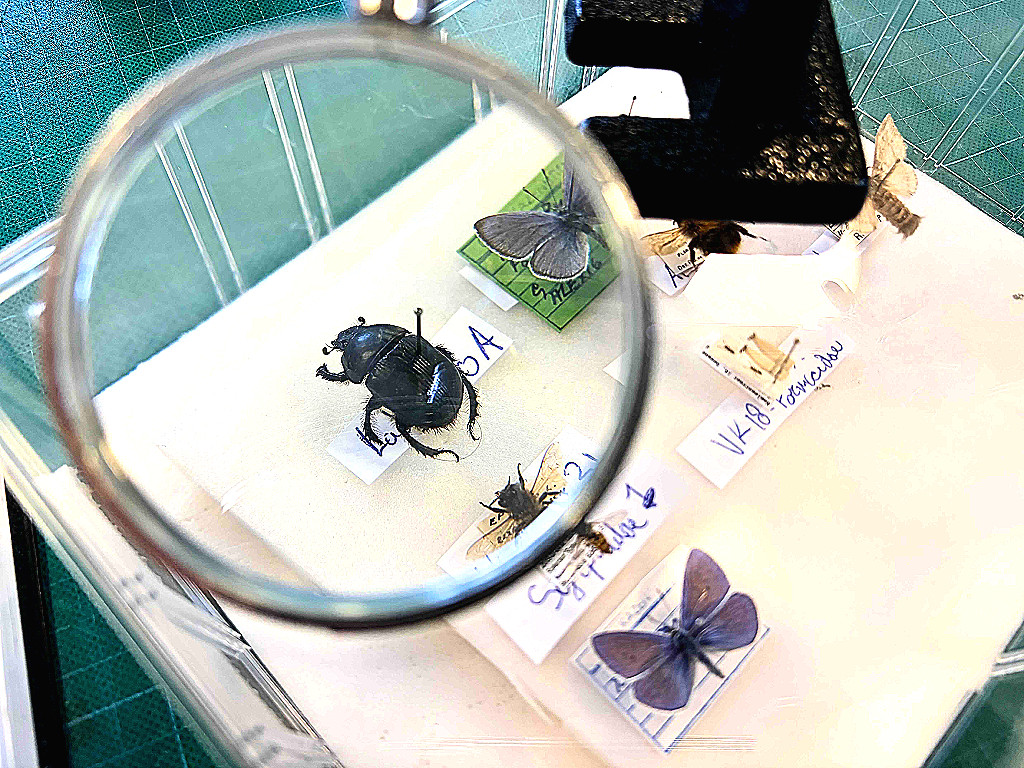
An important part of my research focused on the anatomy of insects. Even the smallest differences distinguish one species from another. To accurately represent each insect in the drawing, it was essential to study these anatomical characteristics in detail.
For example, the upper side of the wings of two butterfly species can appear almost identical, while the pattern on the underside differs completely. This proved to be the case with the specimens I studied. It was an immediate reminder of how much there still was to learn.
During the study, it also became immediately apparent how many details are lost in photographs. One of the beetles I examined was the dor beetle (Geotrupes stercorarius). Its underside and legs were much more densely covered with fine hairs than I had expected, with particularly noticeable tufts around parts of the legs and joints. Initially, I had understood this specimen to be a sacred scarab (Scarabaeus sacer), which is one of the species I am researching for Requiem. This correction made the study even more valuable: seemingly related beetles can differ significantly in their anatomy, and those differences need to be verified at species level before they are translated into the final drawing.
A second observation concerned the position of the middle and hind legs in relation to the abdomen. Because this observation was made on Geotrupes stercorarius rather than Scarabaeus sacer, I will not use it directly as a reference for the sacred scarab. Instead, I intend to investigate the anatomy and leg positioning of Scarabaeus sacer separately before drawing any conclusions.
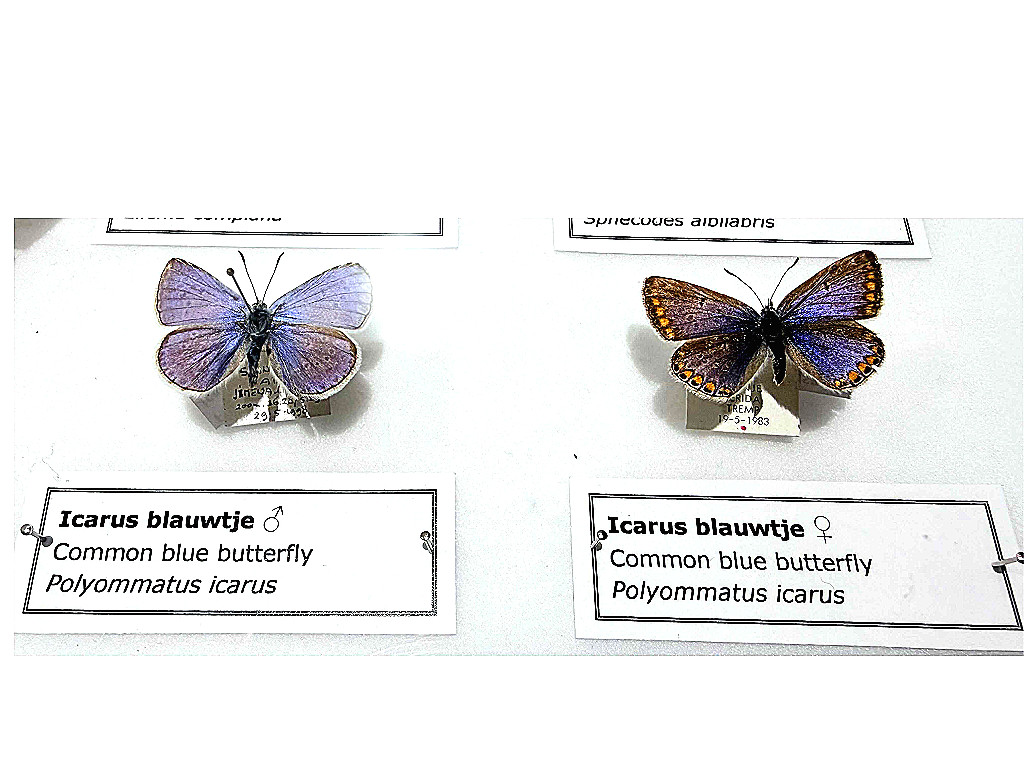
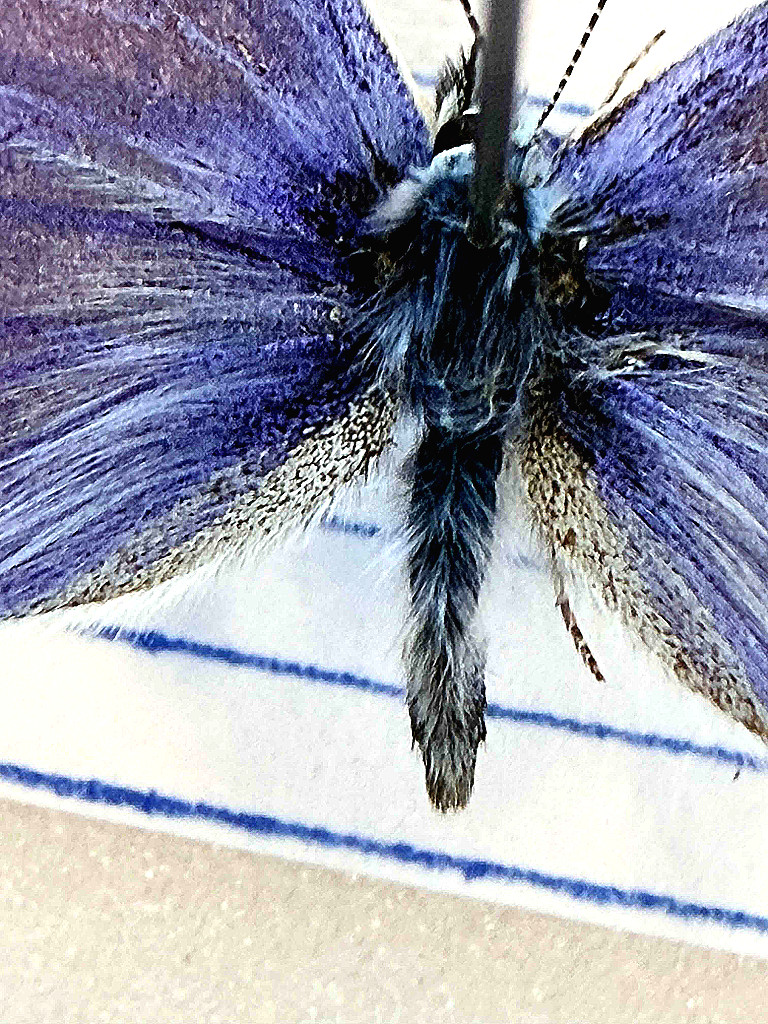
The research immediately led to a revision of the insect selection. The Xerces blue (Glaucopsyche xerces) and the Common Blue (Polyommatus icarus) proved to be anatomically so similar that they would offer too little visual distinction in the final skull composition. As a result, I will be looking for another threatened butterfly species with a more distinctive silhouette to strengthen the composition.
Thanks to this initial study of the museum collection, I now have a valuable set of reference photographs, sketches, and observations that will serve as the foundation for the further development of Requiem over the coming months.
I would like to express my sincere gratitude to the Natural History Museum Rotterdam for granting me access to its collection. In particular, I would like to thank Marijn for his guidance, the careful selection of the specimens, and the additional insights he shared, including the relationship between wild bees and honey bees. His knowledge has significantly enriched this research.